Design and trends
Handleless Kitchens: J-Pull, Rail and Push-to-Open
Key points
- There are four main ways to go handleless: J-pull doors, true handleless rails, push-to-open and integrated or edge handles.
- True handleless rail systems give the cleanest look but need the cabinets built around the rail.
- J-pull doors are a simpler, lower-cost route to a handleless look on standard cabinets.
- Push-to-open suits wall units and tall doors but is less practical on heavily used drawers.
- Decide on the system early, because it affects cabinet sizes, worktop heights and appliance doors.
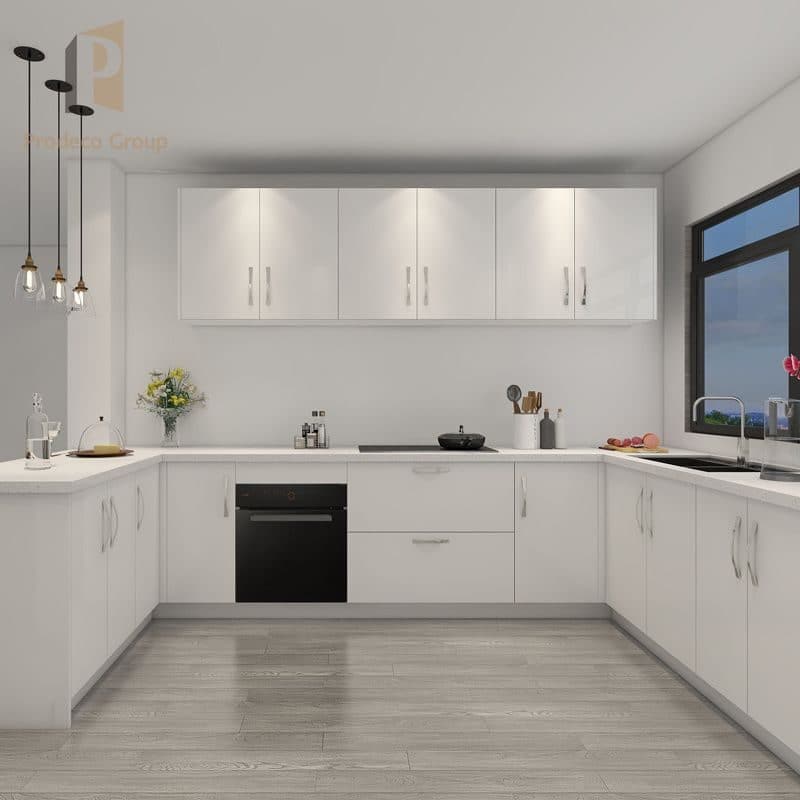
Handleless kitchens have moved from high-end showrooms into mainstream new homes, build-to-rent flats and refurbishments. A handleless kitchen gives clean, uninterrupted lines, suits open-plan living and is easy to wipe down. But "handleless" can mean several different things, and each system affects how the cabinets are made, how the kitchen is used and what it costs to build.
This guide explains the main types of handleless kitchen, for developers, contractors, designers and kitchen retailers in the UK and Ireland.
The four main handleless systems
| System | How it works | Best for |
|---|---|---|
| J-pull doors | A finger grip shaped into the top edge of each door | Simple handleless look on standard cabinets |
| True handleless rail | An aluminium channel fitted between doors and drawers | Premium, architectural kitchens |
| Push-to-open | A mechanism opens the door when pressed | Wall units, tall doors, islands |
| Integrated or edge handles | A slim profile fixed to, or routed into, the door edge | A handleless feel with a precise grip |
J-pull doors
A J-pull door has a grip profile shaped into its top edge, so you hook your fingers behind the door to open it. On drawers, the grip runs along the top of each drawer front.
- Pros: works with standard cabinets, adds little cost and is quick to fit.
- Cons: the grip is part of the door, so it collects crumbs and needs wiping; the look is less crisp than a rail system.
- Check: the grip depth and comfort, and whether wall units use a matching bottom-edge grip or push-to-open.
True handleless rail systems
True handleless kitchens use aluminium rails, often called C-profile and L-profile channels, set into the cabinet run. The doors stop short of the rail, so the gap becomes the grip. An L-profile sits under the worktop for the top drawer or door, and C-profiles sit between lower drawers.
- Pros: the cleanest look, with a continuous shadow line; the rail can be finished in a contrasting or matching colour.
- Cons: cabinets must be designed around the rail, which adds parts and cost; worktop height and drawer sizes are set by the system.
- Check: rail finish, how end panels meet the rail and how integrated appliance doors line up.
Rail systems need the right cabinet construction from the start, so they are best decided at design stage rather than added later.
Push-to-open
Push-to-open mechanisms open a door or drawer when the front is pressed. For doors, a small push latch or a hinge with a push-open function is used. For drawers, the runner itself has a push-to-open action.
- Pros: completely flat fronts; ideal for wall units, tall larder doors and island backs.
- Cons: fronts show fingerprints; heavy drawers can be less pleasant to use; mechanisms need adjusting over time.
- Check: whether soft-close and push-to-open work together on the chosen hardware, and which units will use it.
Many kitchens mix systems: a rail on base units and push-to-open on wall units, for example. Our guide to soft-close hinges and runners explains the hardware behind these choices.
Integrated and edge handles
Integrated handles are slim aluminium profiles fixed to the top edge of a door or drawer, or routed into it. They give a near-handleless look with a more defined grip than a J-pull. Edge handles are useful on slab doors where a full rail system is not possible, and in refurbishments using existing carcasses. Our handles range includes profile and edge handles alongside conventional bars and knobs.
Which door styles suit handleless?
Handleless designs suit flat, slab doors best: matt lacquer, gloss, foil-wrapped and high-quality melamine. Shaker doors are rarely used handleless, because the frame breaks up the clean lines that handleless is chosen for. We compare the two in our article on shaker vs slab doors. Our kitchen door ranges show which finishes are available for handleless designs.
Practical points for developers and contractors
- Accessibility: handleless fronts can be harder to open for some residents. Consider D-handles or easy-grip options for accessible flats and older residents.
- Durability: grips and door edges take the most wear, so check edge quality and finish on the samples.
- Consistency: decide one system per kitchen type across a development, so drawings, orders and replacements stay simple.
- Appliances: integrated dishwashers and fridges need doors that match the chosen grip or rail.
- Repairs: choose a system that will still be available in years to come, so single doors can be replaced.
Cabinet heights and worktops
Rail systems change the vertical setting-out of a kitchen. The L-profile under the worktop takes up height, so base unit carcasses, drawer front sizes and plinth heights must be planned together. If the worktop height is fixed, for example to suit an accessible flat or a standard appliance, check that the chosen system still gives sensible drawer sizes. Agree the setting-out with your kitchen designer before ordering appliances, so built-under ovens and dishwashers fit the rail spacing.
Handleless on a budget
For new-build and build-to-rent schemes, J-pull doors or slim edge handles on standard cabinets give most of the handleless look at a lower build cost than full rail systems. Save true handleless rails for premium plots, penthouses or show homes, where the extra detailing is noticed and valued.
How we can help
Sanyang designs and manufactures kitchens in our own factories, with door ranges and cabinet options for J-pull, rail, push-to-open and handle designs. Our cabinets are made in UK modular sizes; see our cabinet units. We supply housebuilders and developers and kitchen retailers across the UK and Ireland.
We have manufactured kitchens for more than 25 years, ship 500+ containers a month to the US and back our cabinets with a 10-year warranty. Ask us for samples of our handleless options for your next project.
Frequently asked questions
What is the difference between J-pull and true handleless kitchens?
A J-pull door has a finger grip shaped into its own top edge and fits standard cabinets. A true handleless kitchen uses aluminium rails set into the cabinet run, giving a cleaner shadow line but needing cabinets designed around the rail.
Are push-to-open kitchens practical?
They work well on wall units, tall doors and islands, but heavy drawers that are used many times a day are often better with a rail or grip.
Which door styles suit a handleless kitchen?
Flat slab doors in matt or gloss lacquer, foil-wrapped or melamine finishes suit handleless designs best. Shaker doors are rarely used without handles.
Are handleless kitchens suitable for accessible homes?
They can be harder to open for some people. For accessible homes, consider easy-grip handles or a mix of handles and handleless fronts.
About the author. Written by Sanyang's design and technical team, drawing on more than 25 years of manufacturing kitchen and bathroom cabinetry and more than 500 containers a month shipped to the United States. About Sanyang.