Materials and construction
Soft Close Kitchen Hinges and Runners: What to Check
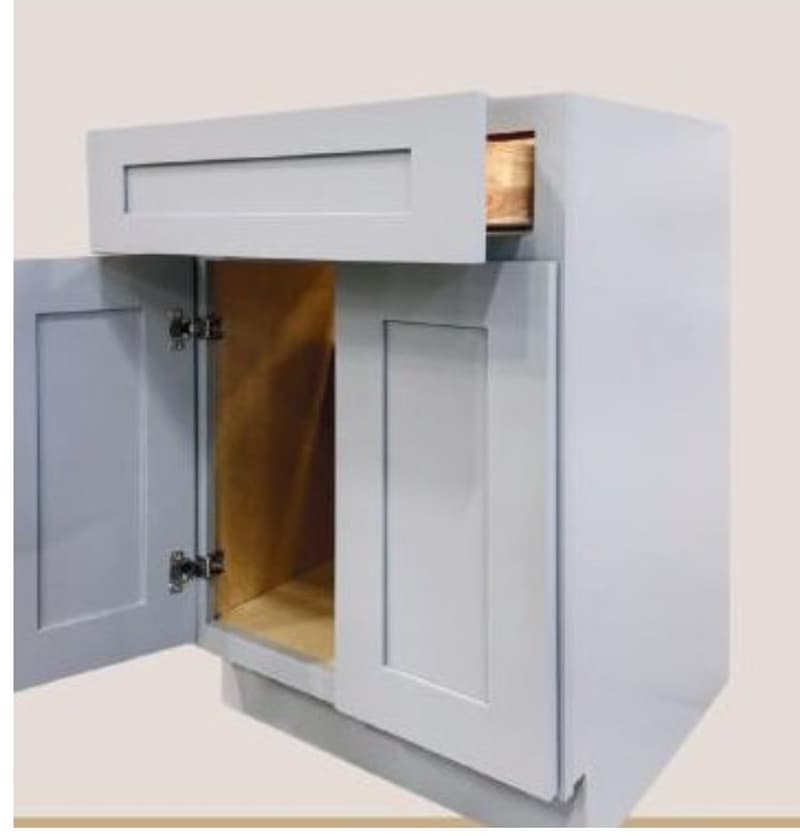
Key points
- Check whether the soft-close damper is built into the hinge or clipped on afterwards.
- Six-way adjustment lets fitters align doors in minutes, on site and at aftercare visits.
- Choose the opening angle for each position: standard, wide-angle and corner hinges differ.
- Undermount, full-extension runners with a stated load rating suit pan drawers.
- Ask which durability tests the hardware has passed, and how replacements are ordered.
Open a drawer in a show home and you learn a lot about the kitchen in one second. A smooth pull, a full view of the drawer and a quiet, controlled close all say quality. A rattle, a drawer that stops halfway out or a door that bangs says the opposite. That is why soft close kitchen hinges and runners deserve as much attention in a specification as the door style.
This guide covers what to check, whether you are specifying a show home, a 100-plot scheme or a build-to-rent block.
How soft close kitchen hinges work
Almost every modern kitchen door hangs on a concealed hinge: a cup, usually 35 mm in diameter, set into a bored hole in the back of the door, and an arm that clips onto a mounting plate screwed inside the cabinet. Soft-close is a small hydraulic damper that catches the door in the last few degrees of travel and closes it gently.
The damper can be in one of two places:
- Integrated: built into the hinge cup or arm. Every hinge damps, the action is consistent from door to door, and nothing extra can be knocked off or lost.
- Add-on: a separate damper clipped onto a standard hinge or screwed into the cabinet. Cheaper, but the closing feel varies, and add-on dampers are the part most often missing at an aftercare visit.
For new-build and rental kitchens, integrated soft-close is worth specifying. It is one less component to fit, check and replace.
Adjustment: why six-way matters
Doors drop, cabinets settle and walls are rarely true. Hinge adjustment lets a fitter correct that with a screwdriver instead of re-drilling.
| Adjustment | What it corrects |
|---|---|
| Side (left and right) | Gaps between neighbouring doors |
| Depth (in and out) | Doors standing proud of or behind the line |
| Height (up and down) | Doors out of level with each other |
A three-way hinge offers these three movements. A six-way hinge allows each to be made in both directions and in finer steps, often with cam screws, so a full run of doors can be lined up quickly. Every one of our cabinet constructions uses six-way adjustable hinges; all except the value Contract build have soft-close as standard.
Opening angles and special positions
Not every door is the same. Check that the schedule names the right hinge for each position:
- Standard doors: a hinge opening to around 110 degrees suits most base and wall units.
- Doors beside a wall or appliance: a wider opening angle lets drawers and pull-outs behind the door clear it.
- Corner units: blind corners and L-shaped corner doors need dedicated corner or bi-fold hinges.
- Integrated appliances: dishwasher and fridge doors hang on the appliance's own hinges or door-on-door slides, not cabinet hinges.
- Tall doors: larder and tall-housing doors need extra hinges along their height to stop them twisting.
Overlay matters too. Full-overlay hinges cover the cabinet side; half-overlay hinges let two doors share one side panel; inset hinges sit the door inside a face frame. Face-frame and frameless cabinets use different hinge geometry, which we explain in face-frame vs frameless cabinets.
Drawer runners: undermount versus side-mount
Runners are the rails a drawer slides on. Two main types are used in kitchens:
- Side-mount (ball-bearing) runners fix to the sides of the drawer box. They are strong but visible, and they take up width inside the cabinet.
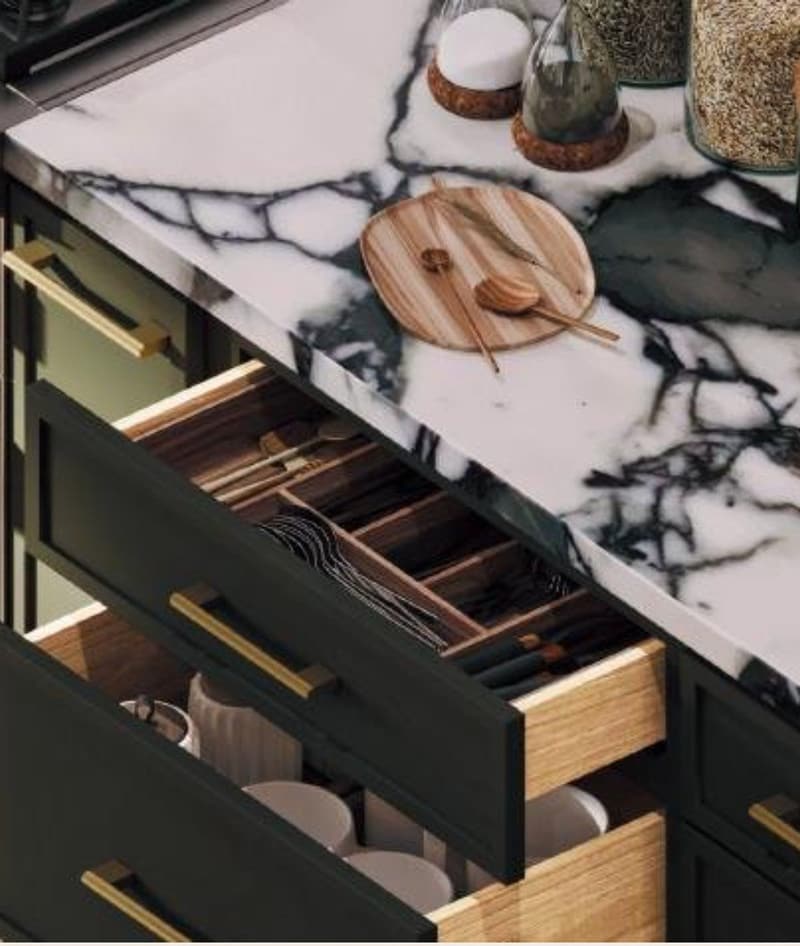
- Undermount runners sit hidden beneath the drawer box. They look cleaner, run more quietly and usually include soft-close and a push-to-open option.
Our Prestige, Slimline, Flex and Frameless constructions all use soft-close undermount runners under the drawer box. Prestige, Slimline and Flex pair them with dovetailed solid-wood drawer boxes; Frameless uses 18 mm plywood drawer boxes.
Extension and load rating
A full-extension runner brings the whole drawer out of the cabinet, so the back of a deep pan drawer is as easy to reach as the front. Partial-extension runners leave the last section inside the cabinet. For pan and cutlery drawers, specify full extension.
Every runner has a load rating: the weight it is designed to carry in use. Pan drawers full of cast iron and stacks of plates carry real weight, so check the rating on the wide, deep drawers in particular, and never assume a cutlery-drawer runner is fine for a 1000 mm pan drawer. Sizes and widths for each drawer unit are listed on our cabinet units page.
Durability testing
Hardware fails through repetition: thousands of openings, loaded drawers and doors that get leaned on. Ask your supplier which durability tests their hinges and runners have passed. European standards cover furniture hardware, including EN 15570 for hinges and EN 15706 for drawer slides, and good hardware makers test well beyond everyday use. Ask too how inspection works before shipping; our quality process covers hardware function as part of pre-shipment inspection.
The carcass matters as much as the hinge
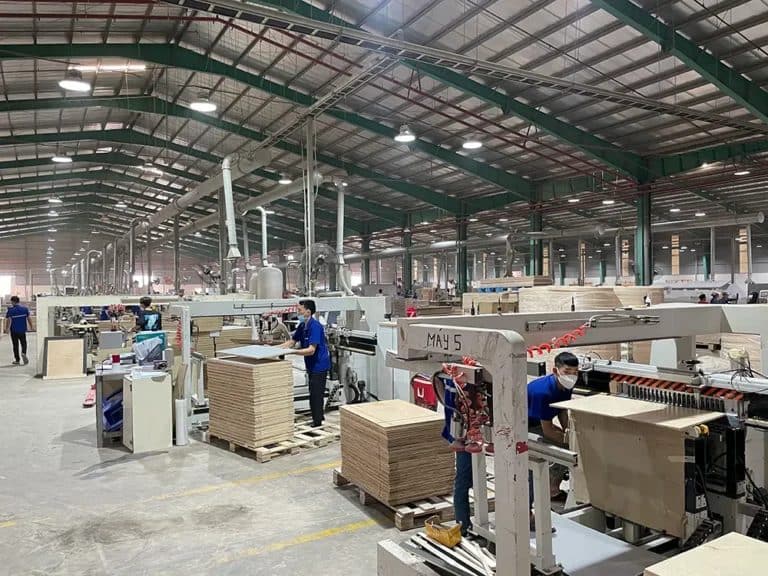
A good hinge screwed into a weak board will still pull out. Hinge plates and runners need firm fixing, and plywood holds screws far better than chipboard, especially after a leak or a few rounds of adjustment. That is why all our constructions use plywood carcasses. See plywood vs MFC for the full comparison.
A checklist for your specification
- Integrated soft-close dampers on every door hinge.
- Six-way adjustable, clip-on hinges.
- The right hinge and opening angle named for corners, wide-angle and tall doors.
- Undermount, full-extension, soft-close runners on all drawers.
- A stated load rating for pan drawers.
- Evidence of durability testing and a pre-shipment hardware check.
- Replacement hinges, dampers and runners available by order code for aftercare.
We have manufactured kitchens for more than 25 years and ship 500+ containers a month to the US, with a 10-year warranty on our cabinets. To see the hardware for yourself before you specify, ask us for samples through the contact page.
Frequently asked questions
What should I look for in soft close kitchen hinges?
Integrated soft-close dampers, six-way adjustment, a clip-on fixing to the mounting plate, and the right opening angle for each door position, including corner and tall doors.
Are integrated soft-close hinges better than add-on dampers?
Usually yes. Integrated dampers give the same closing action on every door and cannot be knocked off or lost, which makes them the better choice for new-build and rental kitchens.
What is the difference between undermount and side-mount drawer runners?
Side-mount runners fix to the sides of the drawer and are visible. Undermount runners sit hidden under the drawer box, run more quietly and normally include soft-close.
Do pan drawers need special runners?
They need full-extension runners with a load rating suited to heavy pans and crockery, especially on wide drawers.
About the author. Written by Sanyang's design and technical team, drawing on more than 25 years of manufacturing kitchen and bathroom cabinetry and more than 500 containers a month shipped to the United States. About Sanyang.