Projects and procurement
Phased Kitchen Delivery for Housebuilders
Key points
- Phased delivery matches kitchen arrivals to the build programme, so stock is not stored on site for months.
- Every carton should be labelled with site, phase, plot, house type and cabinet code.
- A call-off schedule agreed at order stage gives the factory and the site the same plan.
- Check deliveries against the plot schedule on arrival and report damage straight away.
- Hold spare doors, panels and fillers for snagging so plots are not delayed by small items.
On a housing development, a kitchen is not just a product; it is a delivery that has to land on the right plot, at the right stage of the build, in perfect condition. Get it wrong and fitters stand idle, cartons sit in the rain and kitchens end up in the wrong houses. Phased kitchen delivery for housebuilders solves this by matching kitchen arrivals to the build programme and labelling every carton for its plot.
This guide explains how phased delivery and plot labelling work, for housebuilders, developers and contractors in the UK and Ireland.
Why phased delivery matters
Delivering every kitchen for a site at once can look efficient, but it causes problems:
- secure, dry storage on site is limited and expensive;
- cartons stored for months get damaged, wet or lost;
- design changes to later plots may mean stock that is already wrong;
- cash is tied up in kitchens that will not be fitted for a long time.
Phased delivery spreads arrivals across the programme, so each batch arrives shortly before the fitters need it.
Plan phases around the build programme
Start with the site's build programme and work out when each plot will be ready for its kitchen, which is usually after plastering, second-fix carpentry and services are in place. Group plots into delivery phases that match:
- the construction phases already set out by the site team;
- the capacity of the fitting team for each phase;
- the storage available on site, ideally in a secure, dry unit or in the plots themselves;
- show homes and early-sale plots, which often need their kitchens first.
The call-off schedule
A call-off schedule is the shared plan between the site and the supplier. Agree it when the order is placed, and update it as the programme moves. A good schedule lists, for each phase:
| Item | Example |
|---|---|
| Phase and plots | Phase 2, plots 21 to 34 |
| House types and kitchen layouts | Type B, kitchen layout K2, handed on plots 24 and 30 |
| Options and upgrades | Plot 27: upgraded door colour and extra drawer pack |
| Required on site date | Week the plots reach kitchen fit |
| Delivery contact and access | Site manager, gate times, vehicle size limits |
Customer choices are the part that changes most. Set a clear cut-off for buyer options on each phase, so the factory can produce the right kitchens and the site does not receive a standard kitchen for a plot that chose an upgrade.
Ordering by container can also suit phased delivery: kitchens for one or more phases can be planned to fill a container, as we explain in how many kitchens fit in a container.
Plot labelling
Labelling is what turns a load of cartons into kitchens for specific houses. Every carton should carry a label showing:
- site name and phase;
- plot number and house type;
- room (kitchen or utility);
- cabinet or component code and description;
- carton number, for example "carton 7 of 23 for plot 26".
Each plot should also have a packing list showing every carton and its contents. That way the site team can check a plot is complete before the fitters arrive, and fitters can find the right cabinet without opening every box.
Ask for labels on at least two sides of each carton, so they can be read when cartons are stacked. Barcodes or QR codes help on larger sites, where deliveries are booked in on tablets.
Packing for site conditions
Building sites are tough on packaging. Cartons may be moved several times, stacked high and stored in cold, damp conditions. Ask your supplier how kitchens are packed:
- corner protectors and rigid cartons for assembled cabinets;
- doors and panels packed flat, with protective sheets between finished faces;
- worktops and long panels on edge protection or pallets;
- palletised and shrink-wrapped loads, labelled by plot.
Rigid (assembled) cabinets save fitting time on site but take more space in transport and storage. Flat-packed units take less space but need assembly. The right choice depends on the site's labour and storage; our shipping and delivery page explains the options.
Receiving deliveries on site
- Book the delivery slot and make sure there is space and labour to unload.
- Count cartons against the delivery note and plot packing lists.
- Inspect cartons for visible damage before signing, and note any damage on the delivery note.
- Photograph damaged cartons and report them to the supplier the same day.
- Move cartons to their plots or to dry storage straight away.
Early reporting of damage or missing items gives the supplier time to send replacements before the plot is due for fitting.
Spares and snagging stock
Small items hold up completions more often than whole kitchens. A door scratched during fitting, a missing filler or a damaged plinth can stop a plot being signed off. Agree a small stock of spares for the site:
- spare doors and drawer fronts in each colour used;
- end panels, fillers and plinths;
- hinges, runners, handles and fixings.
Spares from the original production run also match the installed kitchens exactly, which matters for later customer care visits.
Information the supplier needs
To plan phased delivery, a supplier needs the site layout and plot schedule, house type kitchen drawings, the build programme and buyer option cut-offs. Our design service can turn house type drawings into coded cabinet schedules for each plot. We also cover the specification side in our guide to the new-build kitchen specification.
How we deliver for housebuilders
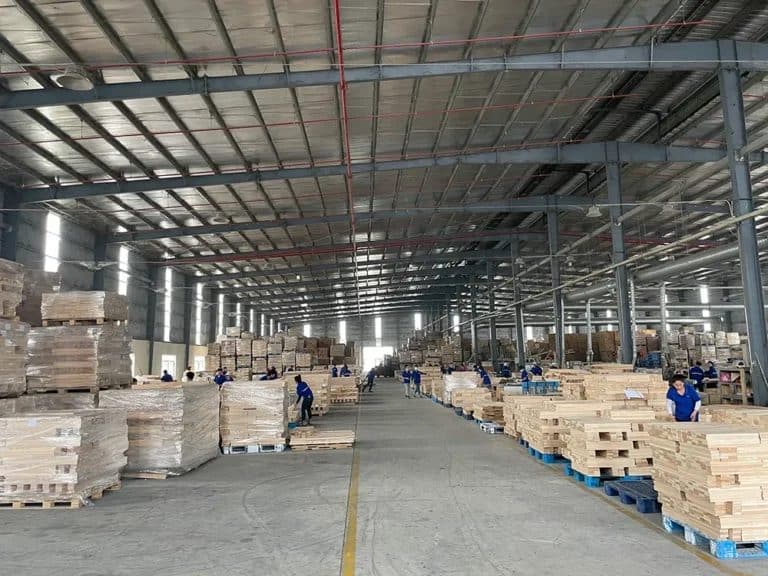
Sanyang manufactures kitchens in our own factories and packs them by plot, with carton labels and packing lists for each house. We plan production and shipping around your build programme, and keep order codes for every door and panel so replacements match. We supply housebuilders and developers across the UK and Ireland.
We have manufactured kitchens for more than 25 years, ship 500+ containers a month to the US and back our cabinets with a 10-year warranty. Send us your plot schedule and build programme, and we will propose a phased delivery plan.
Frequently asked questions
What is phased kitchen delivery?
Delivering kitchens in batches that match the build programme, so each phase of plots receives its kitchens shortly before fitting, rather than all at once.
What should a kitchen plot label show?
Site, phase, plot number, house type, room, cabinet or component code and carton number, such as carton 7 of 23 for that plot.
How do housebuilders handle buyer options with phased delivery?
By setting a cut-off for buyer choices on each phase, so the right kitchens are produced and labelled for each plot.
Why hold spare kitchen parts on site?
Spare doors, panels, fillers and hardware let the site fix damage or missing items quickly, so plots are not delayed at sign-off.
About the author. Written by Sanyang's design and technical team, drawing on more than 25 years of manufacturing kitchen and bathroom cabinetry and more than 500 containers a month shipped to the United States. About Sanyang.