Materials and construction
Plywood vs MFC Kitchen Carcasses: Which Lasts Longer?
Key points
- Plywood holds screws and hinges better than MFC and recovers far better from water.
- MFC (melamine-faced chipboard) is cheaper and very flat, but swells permanently if water gets into a cut edge.
- For rental, student and social housing, plywood's durability usually pays back over the kitchen's life.
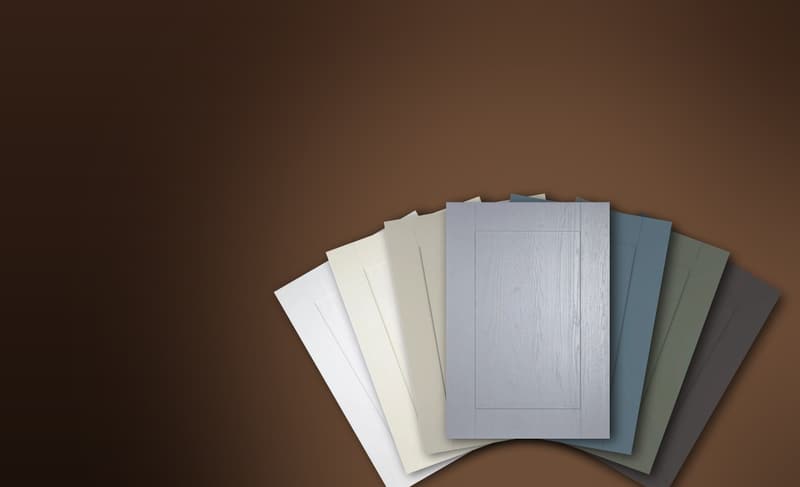
- Every Sanyang construction uses a plywood carcass, from 12 mm UV-painted plywood on Contract to 18 mm on Prestige.
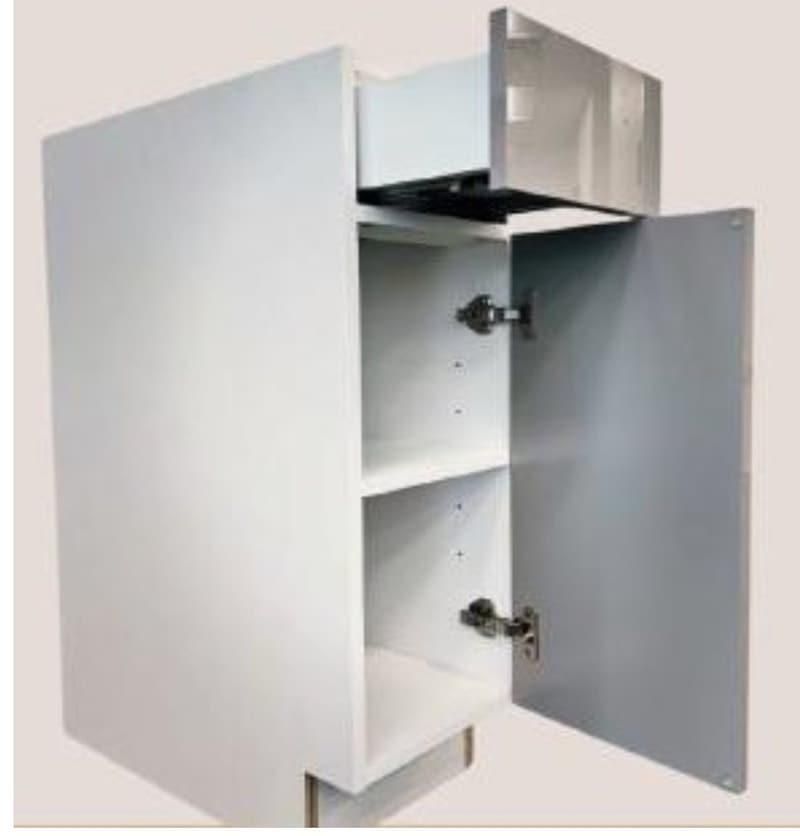
Open any kitchen cabinet and you are looking at its carcass: the box of sides, base, top and back that carries the doors, drawers, worktop and everything stored inside. Buyers choose kitchens by the door, but they keep them, or replace them, because of the carcass. In the UK the two materials you will meet most often are plywood and MFC (melamine-faced chipboard, also called particleboard).
What is the difference?
Plywood is made from thin layers (plies) of real wood veneer, glued with the grain of each layer at right angles to the next. That cross-lamination makes it strong in every direction and stable when humidity changes.
MFC is chipboard, made from wood chips and resin pressed into a board, then faced on both sides with a decorative melamine paper. It is flat, consistent and economical, which is why it dominates the budget end of the market.
Strength and screw holding
Hinges, drawer runners and wall-hanging brackets are all held by screws. In plywood, screws bite into continuous wood fibre, so they hold firmly and can be re-tightened. In chipboard, screws grip loose particles; overtighten one or work it loose a few times and the hole strips. That is the most common reason doors drop and drawers sag in older kitchens.
Moisture: the real test
Kitchens get wet: a leaking trap under the sink, steam from a dishwasher, a mopped floor against the plinth. Melamine faces are waterproof, but cut edges and drilled holes are not. Once water reaches the chipboard core it swells, and the swelling does not go down. Plywood can still be damaged by prolonged soaking, but it tolerates splashes and humidity far better and usually dries out without losing its shape.
Weight, cost and sustainability
Plywood is lighter than chipboard for the same strength, which helps on site and in shipping. MFC is cheaper per square metre, and for that reason many mass-market kitchens use it. Both can be made from certified timber; ask your supplier for FSC documentation and for E1 or CARB Phase 2 formaldehyde compliance whichever you choose.
| Plywood | MFC (chipboard) | |
|---|---|---|
| Screw and hinge holding | Excellent, can be re-tightened | Good when new, strips if over-tightened |
| Moisture tolerance | Good, recovers from splashes | Poor at cut edges, swelling is permanent |
| Weight | Lighter | Heavier |
| Cost | Higher | Lower |
| Typical life | 20+ years | 10 to 15 years, depending on use |
Which should you specify?
For a private-sale home where the first owner will replace the kitchen in ten years, a good MFC carcass can be adequate. For build-to-rent, student accommodation and social housing, where a landlord owns the kitchen for twenty years and tenants change often, plywood's durability usually pays back many times over.
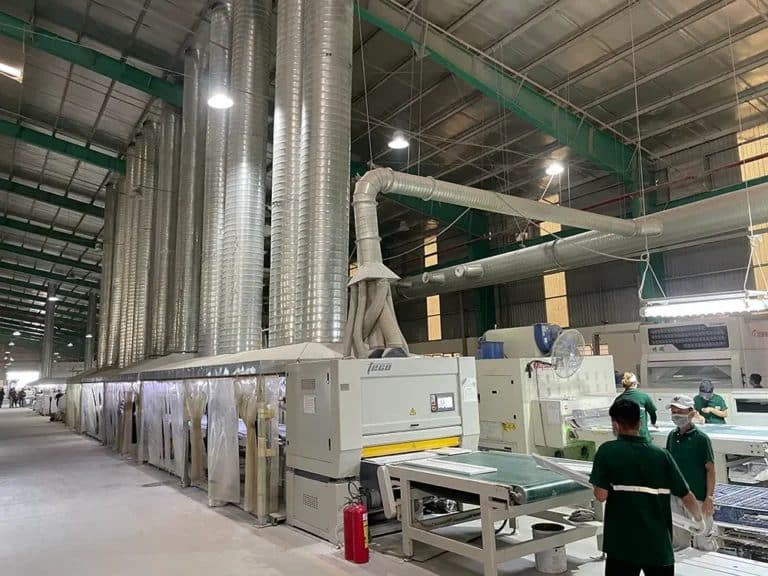
How we build. Every Sanyang construction uses a plywood carcass: 18 mm plywood on Prestige, Slimline, Flex and Frameless, and 12 mm UV-painted plywood on our value Contract construction. You can see each tier's full specification on our construction page.
Frequently asked questions
Is plywood better than chipboard for kitchen cabinets?
For durability, yes: plywood holds screws better, is lighter for the same strength and copes far better with moisture. Chipboard (MFC) is cheaper and very flat, which is why it is common in budget kitchens.
Does MFC swell if it gets wet?
The melamine face is waterproof, but if water reaches a cut edge or drilled hole the chipboard core swells, and the swelling is permanent.
What thickness should a kitchen carcass be?
18 mm is the common standard for sides and bases. Some value constructions use 15 mm or, in plywood, 12 mm with a solid-wood face frame for rigidity.
About the author. Written by Sanyang's design and technical team, drawing on more than 25 years of manufacturing kitchen and bathroom cabinetry and more than 500 containers a month shipped to the United States. About Sanyang.