Buying guides
Kitchen Cabinet Specification: How to Read a Spec Sheet
Key points
- Compare quotations line by line against the specification sheet, not by unit count alone.
- The carcass board and its thickness matter more than the door for long-term durability.
- Drawer construction, runners and hinges are where cheaper kitchens save money.
- Look for named standards such as E1 / CARB P2, FSC and KCMA, not vague claims.
- Check how cabinets are packed and what the warranty covers before you sign.
A kitchen cabinet specification sheet is the most important document in a kitchen quotation, and the one most often skimmed. Two suppliers can quote the same number of units in the same door colour while supplying very different cabinets. The difference is all in the specification: the board inside, the way drawers are built, the hardware and the standards the materials meet.
This guide walks through a typical kitchen cabinet specification line by line, for housebuilders, contractors, housing providers and retailers comparing suppliers in the UK and Ireland.
What a kitchen cabinet specification should include
A complete specification describes every part of the cabinet, not just the door. At minimum it should cover:
| Line | What it tells you | Example |
|---|---|---|
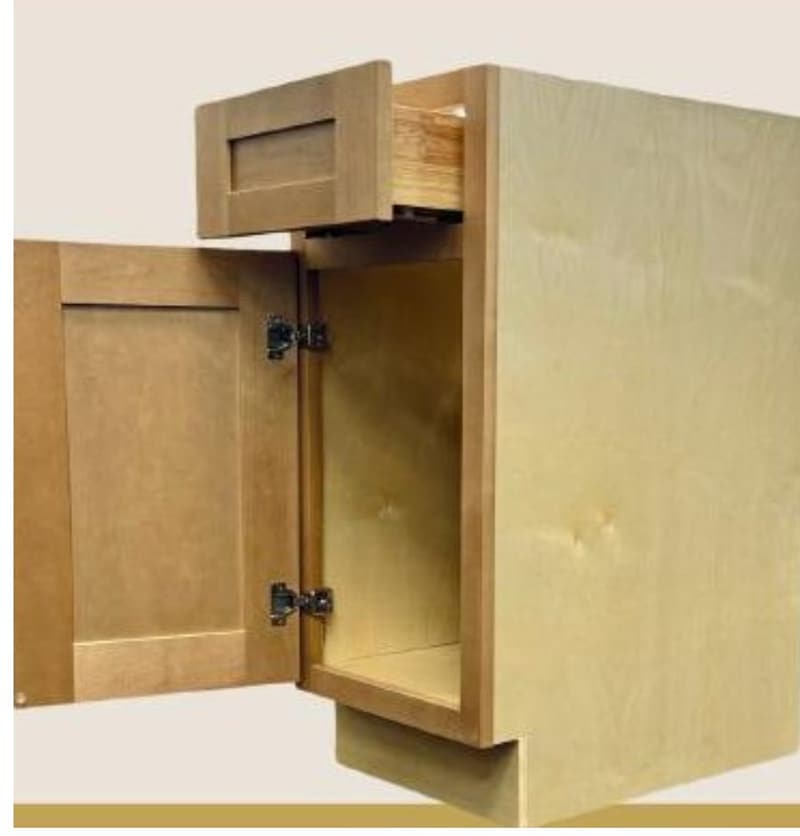
| Carcass | Board type, thickness and finish inside and out | 18 mm plywood, clear UV interior |
| Frame | Face frame or frameless construction | 19 mm solid-wood face frame |
| Doors and fronts | Material, construction and finish | Five-piece solid wood, painted |
| Drawer box | Material, joint and side height | Solid wood, dovetailed, 64 mm sides |
| Runners | Type, extension and closing action | Undermount, soft-close |
| Hinges | Adjustment and closing action | 6-way adjustable, soft-close |
| Shelves | Board and thickness | 18 mm plywood |
| Compliance | Named standards for boards, timber and performance | E1 / CARB P2, FSC available, KCMA |
| Packing | How each cabinet ships | One box per cabinet |
| Warranty | Length and what is covered | 10 years on cabinets |
If a quotation leaves any of these out, ask for it in writing before comparing prices.
The carcass: board, thickness and finish
The carcass is the box behind the door, and it decides how the kitchen survives leaks, heavy worktops and years of use. Read three things on this line:
- Board type: plywood, MFC (melamine-faced chipboard) or MDF. Plywood holds screws better and resists swelling when wet; MFC is cheaper and fine in dry positions. Our comparison of plywood vs MFC carcasses explains the trade-offs.
- Thickness: 18 mm is the common standard for a rigid cabinet. Thinner sides (12 mm or 15 mm) are used on value ranges and need good support from the worktop and fixings.
- Finish: the interior finish (clear lacquer, UV paint or melamine) and whether exposed ends are finished to match the doors or need separate end panels.
Also check the back panel (thickness and how it is fixed) and whether every edge is banded, including hidden ones.
Face frame or frameless
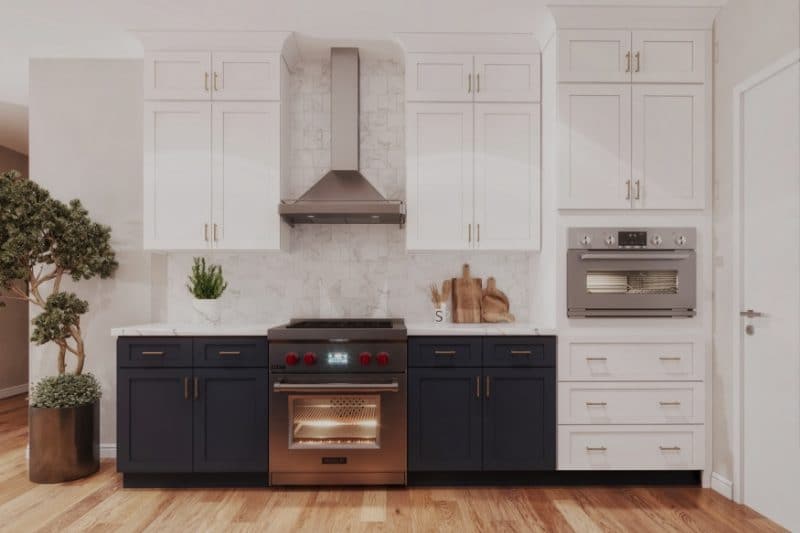
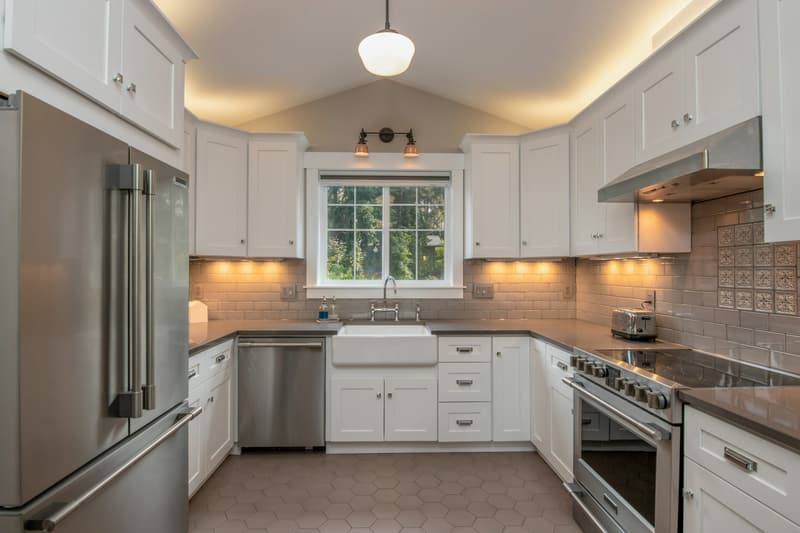
Face-frame cabinets have a solid-wood frame on the front of the carcass, which adds strength and gives the classic shaker look. Frameless cabinets have no frame, so doors cover the whole box and the interior is fully accessible. Neither is better in every case; they suit different door styles and budgets. Our guide to face frame vs frameless cabinets covers the detail.
Doors and drawer fronts
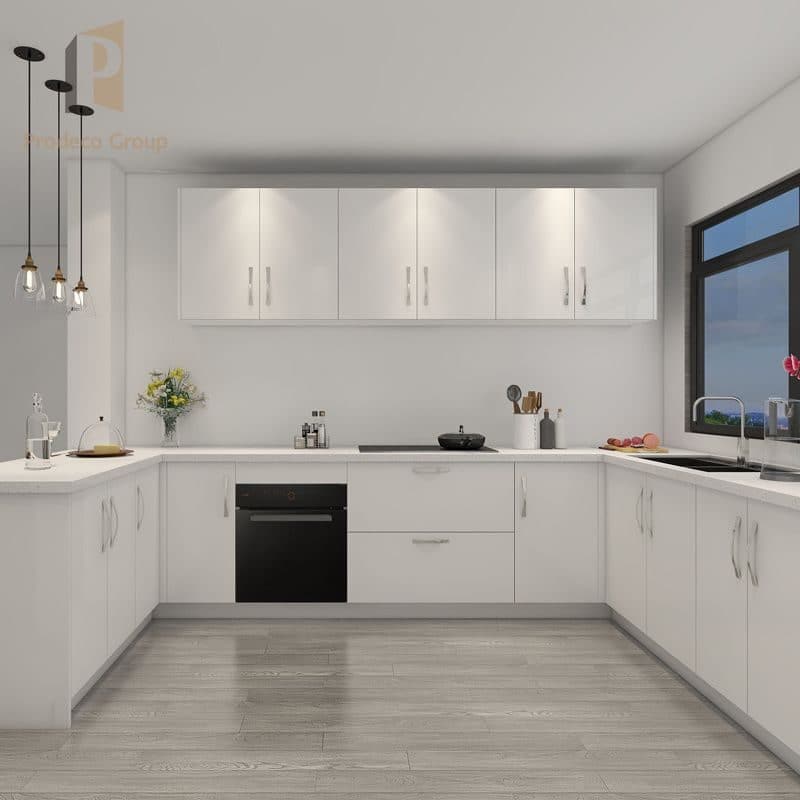
The door line should name the material (solid wood, MDF, vinyl-wrapped MDF, acrylic, melamine), the construction (five-piece or slab) and the finish (painted, thermofoil, gloss, matt). "Shaker door, white" is not a specification. "Five-piece solid-wood shaker door with MDF centre panel, painted" is.
Drawers, runners and hinges
Hardware is where cheaper kitchens save the most money, and where failures show first. Read these lines closely:
- Drawer box: solid wood with dovetail joints is the strongest; plywood or melamine boxes are common on frameless and value ranges. Side height (for example 64 mm or 79 mm) tells you how deep the drawer box is.
- Runners: undermount runners are hidden under the drawer and usually smoother and stronger than side-mounted ones. Check whether they are soft-close and full-extension.
- Hinges: look for adjustable hinges (6-way adjustment makes door alignment easier on site) and soft-close.
Our guide to soft-close hinges and runners lists what to test on a sample cabinet.
Sizes and order codes
A good specification sheet links to a unit list with a code for every cabinet: widths, heights and depths, door configuration and handing. Codes make it possible to order, check deliveries and replace a damaged unit years later without guesswork. See our cabinet units and sizes for how a coded range is laid out.
Compliance and certification
Vague phrases such as "eco-friendly boards" or "high-quality timber" mean nothing on their own. Look for named standards:
- E1 / CARB Phase 2: formaldehyde emission limits for wood-based boards.
- FSC: certified timber and chain of custody, where you need it for planning or ESG reporting.
- KCMA: performance testing for kitchen cabinets.
- ISO 9001: the factory's quality management system.
Ask for certificates, not just logos. Our quality and certifications page lists ours.
Packing and delivery
The packing line tells you how much work happens on site. "One box per cabinet" means each unit arrives assembled with its door fitted; "box plus a separate front set" means doors and drawer fronts are packed separately, which suits schemes that mix colours. Check carton labelling too: plot or unit labels save hours of sorting on a large site.
Warranty
A warranty is only as useful as its wording. Check the length, what it covers (carcass, doors, hardware), what voids it (poor installation, water damage) and how claims are handled. Our cabinets carry a 10-year warranty.
Red flags on a specification sheet
- Board thickness or type not stated.
- "Soft-close" mentioned for doors but not drawers, or the reverse.
- No drawer box material or joint.
- Standards mentioned without certificate numbers.
- No unit codes, or codes that change between quotations.
How our constructions compare
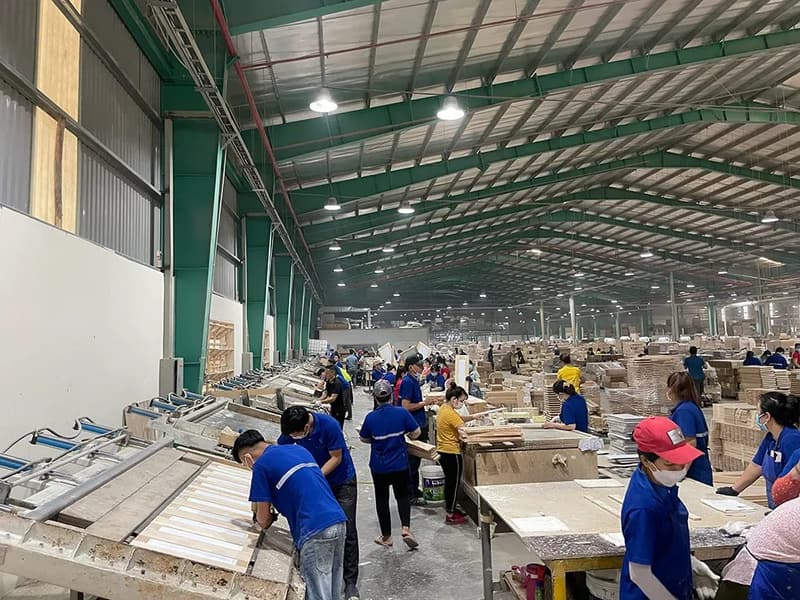
We publish a full specification for each of our five constructions, from Prestige (18 mm plywood carcass, solid-wood face frame, dovetailed solid-wood drawers) to Contract (12 mm UV-painted plywood carcass for volume housing). Every line in this guide appears on our construction and materials page, so you can compare like for like. Sanyang has manufactured kitchens for more than 25 years in our own factories and ships 500+ containers a month to the US.
Frequently asked questions
What should a kitchen cabinet specification include?
The carcass board and thickness, frame type, door material and finish, drawer box, runners, hinges, shelves, named compliance standards, packing method and warranty terms.
What is the best carcass material for kitchen cabinets?
Plywood holds screws well and resists swelling when wet, so it suits sink units and long-life kitchens. MFC is cheaper and works in dry positions. 18 mm is the common thickness for a rigid cabinet.
Why do two kitchen quotations differ so much in price?
Usually because the specifications differ: carcass board, drawer construction, runners, hinges and finishes can change the cost a great deal even when the door looks the same.
Which certifications should kitchen cabinets have?
Look for E1 or CARB Phase 2 boards, FSC timber where needed, KCMA performance testing and an ISO 9001 quality system, with certificates available on request.
About the author. Written by Sanyang's design and technical team, drawing on more than 25 years of manufacturing kitchen and bathroom cabinetry and more than 500 containers a month shipped to the United States. About Sanyang.