Materials and construction
Painted vs Lacquered Kitchen Doors: Which Lasts?
Key points
- Painted doors are sprayed in coats over timber or MDF and can be touched up or refinished.
- Lacquered doors carry a hard, clear or pigmented top coat in a chosen sheen level.
- Thermofoil is a vinyl skin vacuum-pressed over MDF: seamless, wipe-clean and lower cost, but it dislikes direct heat.
- Edge and joint detail matter more than the finish name: check corners, routed profiles and frame joints.
- Keep spare doors from the same batch, because colour matching later is harder than it looks.
Painted vs lacquered kitchen doors is one of the most common questions on a specification, and the answer is less about the words on the schedule than about how the finish is built up and where the kitchen will live. Add vinyl-wrapped thermofoil, which looks like paint from a metre away, and you have three finishes that can look the same at handover and wear very differently.
This guide compares them for housebuilders, contractors, housing providers and retailers. For the materials under the finish (solid wood, MDF, acrylic, melamine), see our guide to kitchen door materials.
What "painted" and "lacquered" actually mean
The terms overlap, and suppliers use them loosely. In kitchen manufacturing they usually mean:
- Painted: a pigmented coating sprayed in several coats over sealed timber or MDF, sanded between coats. The final coat can be matt, satin or gloss. Most painted shaker doors are made this way.
- Lacquered: a hard, fast-curing top coat, often a two-part polyurethane or acrylic lacquer, applied clear over a colour coat or with the colour mixed in. Lacquer is usually chosen for smooth slab doors, where it can be polished to a high gloss.
- Thermofoil (vinyl-wrapped MDF): not a coating at all. A PVC film is heated and vacuum-pressed over a routed MDF door, wrapping the face and edges in one continuous skin.
So a "painted" door often has a lacquer top coat, and a "lacquered" door often has paint underneath. The useful questions are what the substrate is, how many coats there are, how they are cured and what sheen the final coat has.
Painted vs lacquered kitchen doors compared
| Painted (timber or MDF) | Lacquered slab | Thermofoil (vinyl-wrapped MDF) | |
|---|---|---|---|
| Typical door style | Shaker, raised panel, framed | Flat slab, handleless | Shaker profiles, arched, slab |
| Look | Soft, traditional, visible joints on framed doors | Smooth, uniform, can be very high gloss | Seamless, uniform colour, painted look |
| Knocks and chips | Can chip at edges; repairable | Hard surface; chips show on gloss | Resists chips; film can lift if damaged |
| Heat | Good | Good | Needs protection near ovens and grills |
| Moisture | Good if fully sealed, including edges | Good if fully sealed | Good: one continuous skin over face and edges |
| Repair on site | Touch up or respray | Specialist repair; gloss is hard to blend | Usually replace the door |
| Relative cost | Higher | Higher | Lower |
Painted doors: where they work best
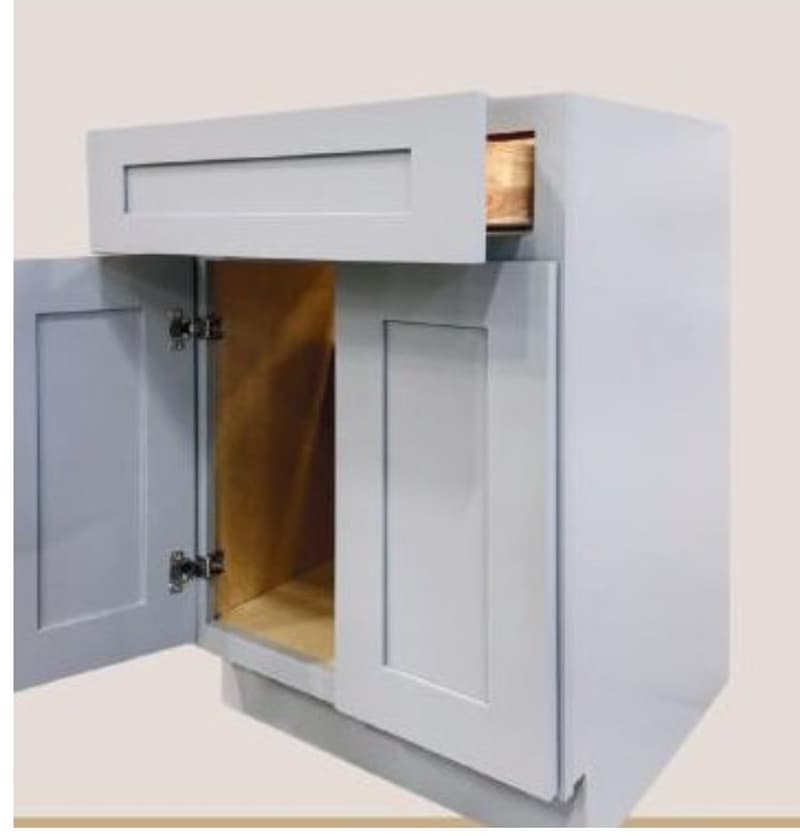
A painted five-piece door, with a solid-wood frame and an MDF centre panel, is the classic shaker. It suits owner-occupied homes, premium plots and retail customers who want a traditional kitchen that can be refreshed later. Our Meridian shaker is built this way, painted to a smooth, even finish.
Points to check on a painted door:
- Frame joints: timber moves slightly with humidity, so a fine line can appear at the joint between rail and stile. This is normal on framed doors, not a defect, but buyers should know.
- Number of coats and sanding: a factory finish with primer, sanding and two or more colour coats is far tougher than a single sprayed coat.
- Edges and back: the back and edges should be sealed as well as the face, so moisture cannot get in from behind.
- Touch-up kit: ask for a matching touch-up paint per colour, so small chips can be repaired at snagging.
Lacquered doors: where they work best
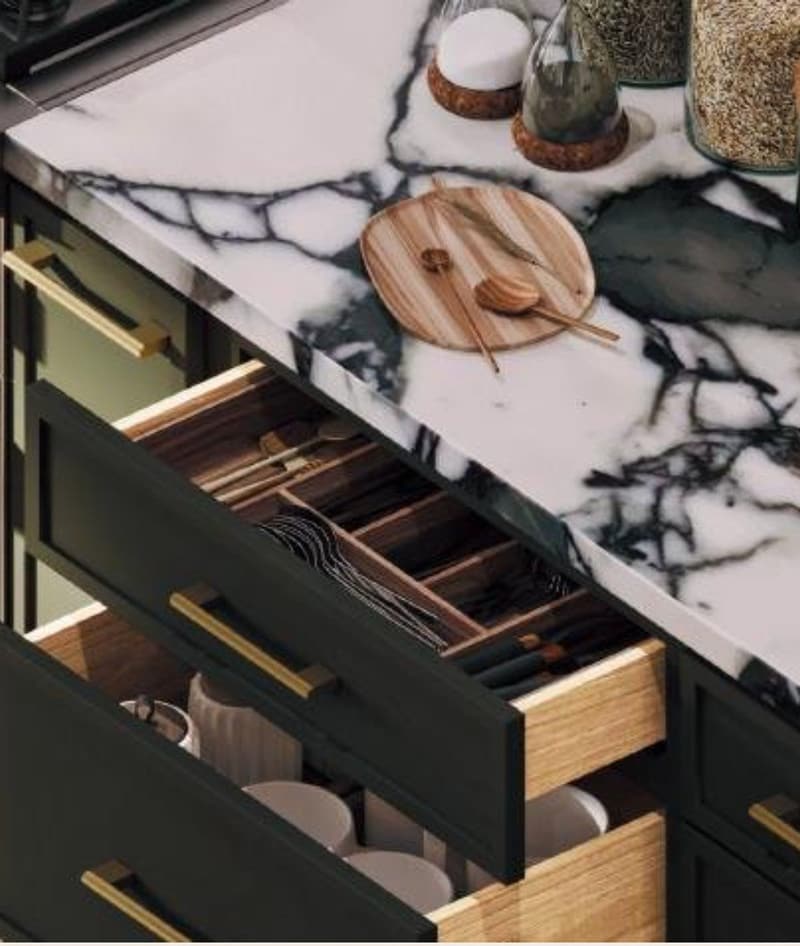
Lacquer suits slab doors in modern apartments and premium homes, especially in high gloss. A well-applied lacquer is hard and smooth, and it can be polished to a deep shine. The trade-offs are cost, and that gloss lacquer shows every chip and scratch. A repair is hard to blend in once the surrounding doors have aged.
If you want the gloss look with less risk, an acrylic-faced door is an alternative: the gloss is part of the board's surface rather than a coating, and it is easy to clean. Our Lustre acrylic gloss doors are made this way.
Thermofoil: the practical painted look
Vinyl-wrapped MDF gives the look of a painted shaker at a lower cost. Because the film wraps the face and edges in one piece, there are no joints for water to get into and the colour is perfectly uniform across hundreds of doors. That makes it a strong choice for volume housing, build-to-rent and refurbishment programmes.
Its weak point is heat. Prolonged direct heat from an oven, grill or toaster can soften the adhesive and make the film lift. Specify heat deflectors or spacers on tall oven housings, and keep doors and end panels away from built-under oven vents. Our Spectrum range offers four thermofoil shaker profiles, with plain and woodgrain colours.
Choosing by sector
- Build-to-rent and social housing: thermofoil, melamine or super-matt slab. Tough, uniform and cheaper to replace than to repair.
- Private sale new builds: thermofoil for the standard range, painted shaker as an upgrade option.
- Premium plots and retail: painted solid-wood shaker, or lacquer or acrylic gloss for slab kitchens.
Whatever you choose, use one finish per house type where you can, and record the colour and batch on the handover file. Replacement doors from a later batch can differ slightly, so many developers hold a small stock of spare doors from the original production. See our guide to new build kitchen specification for the full checklist.
Questions to ask your supplier
- What is the substrate: solid timber, MDF or both?
- How many coats, and is the finish sanded between them?
- Are the backs and edges sealed?
- For thermofoil, what film thickness, and what heat protection is recommended?
- Can you supply touch-up paint and spare doors from the same batch?
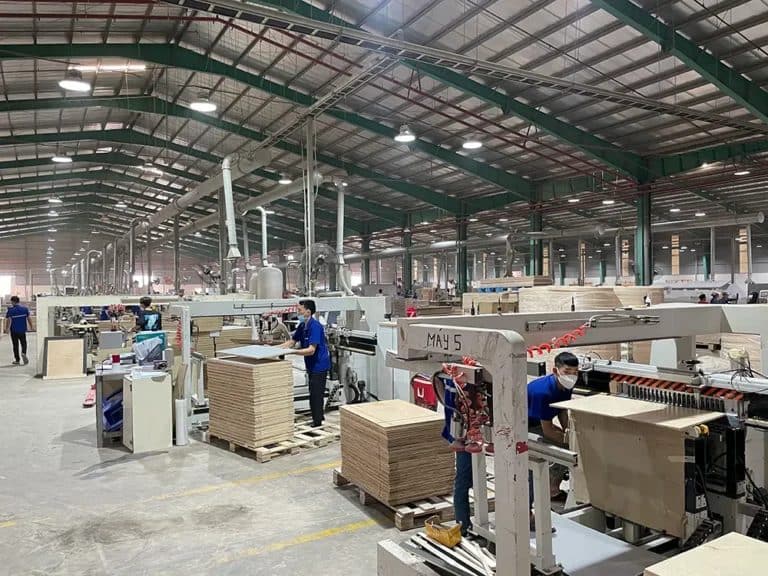
Sanyang has manufactured kitchens for more than 25 years in our own factories in China, Vietnam and Thailand, and ships 500+ containers a month to the US. Our 16 collections include painted solid-wood shakers, vinyl-wrapped thermofoil, acrylic gloss and melamine, so you can match the finish to each project. See all kitchen collections or ask us for door samples.
Frequently asked questions
What is the difference between painted and lacquered kitchen doors?
Painted doors have a pigmented coating sprayed in several coats over timber or MDF. Lacquered doors have a hard, fast-curing top coat, often polished to gloss on slab doors. In practice many painted doors have a lacquer top coat.
Which lasts longer, painted or lacquered kitchen doors?
Both last well when factory-finished in several coats with sealed edges. Painted doors are easier to touch up; gloss lacquer is harder but shows chips and is harder to repair invisibly.
Is thermofoil as good as a painted door?
It gives a uniform painted look at a lower cost and resists moisture well, but it needs protection from direct oven heat and is usually replaced rather than repaired.
Which kitchen door finish is best for rental homes?
Thermofoil, melamine or super-matt slab doors, because they are tough, uniform and cheap to replace.
About the author. Written by Sanyang's design and technical team, drawing on more than 25 years of manufacturing kitchen and bathroom cabinetry and more than 500 containers a month shipped to the United States. About Sanyang.